Thyroid and Fertility: Why Your Thyroid is the Unsung Hero of Your Fertility Journey
January 30, 2026 | Last updated: July 22, 2026 | Medically Reviewed by: Dr. Munawwer Sana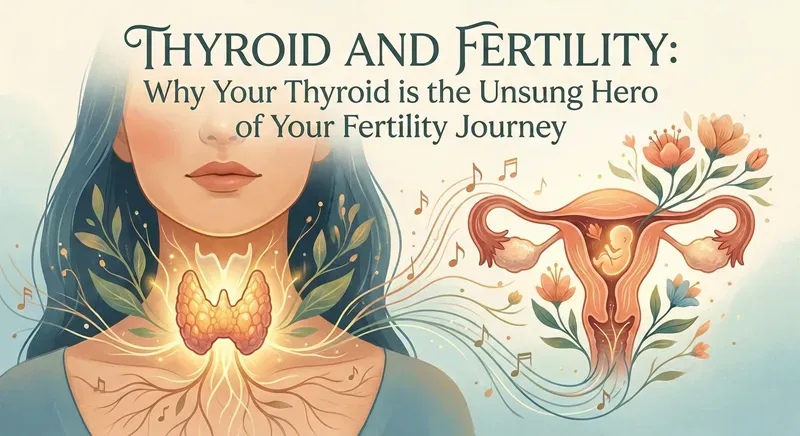
By Dr. Munawwer Sana, Senior Consultant Reproductive Medicine and Surgery, Apollo Fertility.
January 2026 marks Thyroid Awareness Month, a global initiative to educate on the critical, often-overlooked role of the thyroid gland in regulating metabolism, energy, and overall health. For those navigating the complex path to parenthood, this awareness is not just general health advice, it is absolutely essential. As a Consultant Reproductive Medicine and Surgery specialist, I see firsthand how the smallest imbalance in this butterfly-shaped gland can create significant hurdles on the fertility journey. This comprehensive guide explores the profound connection between your thyroid and your reproductive health, and what you need to know to optimize your chances of conception, whether naturally or through advanced treatments like IVF and Thyroid Health management.
The Thyroid: A Master Conductor of the Body
The thyroid gland, located at the base of your neck, produces two primary hormones: thyroxine (T4) and triiodothyronine (T3). These hormones are the master conductors of your body, influencing nearly every cell, tissue, and organ. They dictate your metabolic rate, heart function, digestion, muscle control, brain development, and mood. Crucially, they also play a non-negotiable role in the delicate hormonal symphony required for reproduction.
When the thyroid is underactive (hypothyroidism) or overactive (hyperthyroidism), this symphony falls into disarray, leading to a cascade of reproductive issues. Thyroid disorders are remarkably common, affecting millions globally, and are disproportionately prevalent in women—up to eight times more often than in men.
The Critical Link: Thyroid and Fertility
The relationship between the thyroid and the reproductive system is intricate and bidirectional. Thyroid hormones directly influence the production and regulation of sex hormones, including estrogen and progesterone.
Here is how healthy thyroid function is paramount for fertility:
- Ovulation and Menstrual Cycle Regulation: Thyroid hormones are necessary for the normal development of ovarian follicles and the release of an egg (ovulation). An underactive thyroid can disrupt the menstrual cycle, leading to irregular or absent periods (anovulation), which is a primary cause of female infertility.
- Egg Quality: Optimal thyroid function is believed to support better egg quality, which is vital for successful fertilization and embryo development.
- Implantation: Thyroid hormones are critical for preparing the uterine lining (endometrium) for embryo implantation. Imbalances can lead to a hostile environment, increasing the risk of implantation failure.
Hypothyroidism and Pregnancy: The Silent Saboteur
Hypothyroidism, where the thyroid does not produce enough hormones, is perhaps the most common thyroid-related issue encountered in fertility clinics. The body compensates for low T4 and T3 by producing more Thyroid-Stimulating Hormone (TSH). High TSH levels are a red flag for reproductive specialists.
Understanding TSH Levels for Conception
While the general population's normal TSH range is broad, the target for women trying to conceive is much narrower and more stringent.
- General Range: Typically up to 4.5 or 5.0 mIU/L.
- Optimal Conception Range: Most reproductive endocrinology guidelines recommend a TSH level below 2.5 mIU/L for women who are actively trying to conceive, undergoing IVF, or in the first trimester of pregnancy.
This lower threshold is crucial because even Subclinical Hypothyroidism Infertility—where TSH is slightly elevated (e.g., between 2.5 and 4.0 mIU/L) but T4 levels are still normal—can negatively impact fertility and increase the risk of miscarriage. Early diagnosis and treatment with levothyroxine are simple, effective steps that can dramatically improve outcomes.
The Autoimmune Factor: TPO Antibodies and Reproductive Risk
Beyond simple hormone levels, the presence of Thyroid Peroxidase (TPO) Antibodies is a significant concern in reproductive medicine. TPO antibodies indicate an autoimmune condition, such as Hashimoto’s thyroiditis, where the body mistakenly attacks the thyroid gland.
The presence of these antibodies, even in women with normal TSH levels (euthyroid), has been consistently linked to:
- Increased Miscarriage Risk: TPO antibodies are associated with a higher rate of early pregnancy loss.
- Lower IVF Success Rates: Studies suggest that TPO positivity can negatively affect the success of in vitro fertilization (IVF) cycles, potentially due to underlying immune system activation that interferes with implantation.
For patients with TPO antibodies, a Reproductive Medicine Specialist Hyderabad or elsewhere will often recommend a proactive approach, including close monitoring and sometimes low-dose levothyroxine treatment, even if the TSH is within the normal range, to mitigate these risks.
The Overlap: PCOS and Thyroid Connection
The journey to parenthood is often complicated by co-existing conditions. One of the most common overlaps I encounter is between Polycystic Ovary Syndrome (PCOS) and thyroid disorders.
PCOS is characterized by hormonal imbalances, irregular periods, and often insulin resistance. Research indicates a higher prevalence of thyroid disorders, particularly Hashimoto’s thyroiditis, in women with PCOS. The two conditions share inflammatory pathways and hormonal disruptions, creating a complex challenge for fertility. Addressing the thyroid component is a vital step in managing PCOS-related infertility.
Thyroid Management During IVF and Pregnancy
For patients undergoing IVF and Thyroid Health management is a dynamic process. The high estrogen levels during controlled ovarian hyperstimulation (COH) can increase the body’s demand for thyroid hormone. This means that a woman whose thyroid levels were stable before IVF may require an adjustment in her levothyroxine dosage during the treatment cycle.
Once conception is achieved, whether naturally or through IVF, the need for vigilant monitoring continues. Hypothyroidism and Pregnancy is a critical area of focus because the baby relies entirely on the mother's thyroid hormone supply for brain and nervous system development during the first trimester.
- Monitoring: TSH and free T4 levels should be checked every four to six weeks throughout the pregnancy.
- Adjustment: Dosage adjustments are common and necessary to ensure the TSH remains in the optimal, low range (ideally <2.5 mIU/L).
Your Action Plan for Thyroid Health and Fertility
If you are planning a pregnancy or struggling with infertility, here are the essential steps you should take:
- Get Tested, Not Just Screened: Request a full thyroid panel, not just a TSH test. This should include:
- TSH (Thyroid-Stimulating Hormone)
- Free T4 (Free Thyroxine)
- TPO Antibodies (Thyroid Peroxidase Antibodies)
- Know Your Target: Discuss your TSH results with your fertility specialist. Remember, a "normal" TSH for the general public may be too high for optimal conception. Aim for TSH below 2.5 mIU/L.
- Seek Specialized Care: Thyroid disorders in the context of fertility require specialized expertise. A reproductive medicine specialist is best equipped to manage the delicate balance between thyroid treatment and fertility protocols.
Hyperthyroidism: The Other Side of the Coin
While hypothyroidism is more commonly associated with infertility, an overactive thyroid (Hyperthyroidism) also poses significant reproductive risks. In hyperthyroidism, the gland produces an excess of T4 and T3, leading to symptoms like rapid heart rate, weight loss, and anxiety.
In the context of fertility, hyperthyroidism can cause:
- Menstrual Irregularities: Severe hyperthyroidism can lead to oligomenorrhea (infrequent periods) or amenorrhea (absence of periods), directly hindering conception.
- Increased Miscarriage and Preterm Birth: Uncontrolled hyperthyroidism during pregnancy is associated with a higher risk of miscarriage, preterm delivery, and complications for the fetus, including low birth weight and congenital malformations.
Management of hyperthyroidism before and during pregnancy requires careful coordination between the reproductive specialist and an endocrinologist, often involving anti-thyroid medications that are safe for the developing fetus.
The Male Factor: Thyroid Health is Not Just a Woman's Issue
It is a common misconception that thyroid health is only relevant to female fertility. However, the thyroid gland is equally vital for male reproductive function. Thyroid hormones are necessary for the normal development and function of the testes.
Thyroid dysfunction in men can lead to:
- Reduced Sperm Quality: Both hypo- and hyperthyroidism have been linked to changes in sperm morphology (shape), motility (movement), and concentration.
- Erectile Dysfunction: Thyroid imbalances can affect sexual function, further complicating conception efforts.
When a couple presents with infertility, a comprehensive workup must include a thyroid panel for both partners. Optimizing the male partner's thyroid health is a simple, non-invasive step that can significantly contribute to the overall success of the fertility plan.
Final Thoughts and Your Path Forward
Thyroid Awareness Month 2026 serves as a powerful reminder that the body is an interconnected system. For those pursuing the dream of parenthood, the thyroid gland is a critical piece of the puzzle.
Do not settle for generic health advice when your fertility is on the line. Take control of your health this January by ensuring your thyroid is functioning optimally.
Author Bio

Dr. Munawwer Sana
Highly accomplished Consultant Reproductive Medicine and Obstetrics and Gynecology with over 13 years of experience. My comprehensive background includes MBBS, MRCOG (UK), Fellowship in Reproductiv...
For women trying to conceive or undergoing IVF, TSH should ideally be below 2.5 mIU/L, which is lower than the general population's normal range of up to 4.5-5.0 mIU/L.
Yes, hypothyroidism disrupts ovulation, causes irregular periods, affects egg quality, and impairs uterine lining development, making it a common cause of female infertility.
Yes, TPO antibodies raise miscarriage risk and lower IVF success rates even when TSH is normal, so specialists often recommend monitoring or low-dose levothyroxine treatment
TSH and free T4 levels should be checked every four to six weeks throughout pregnancy, with dosage adjustments made to keep TSH ideally below 2.5 mIU/L
Yes, thyroid dysfunction in men can reduce sperm quality, affect motility and morphology, and cause erectile dysfunction, so both partners need thyroid testing